A significant unexploded ordnance (UXO) incident unfolded in Plymouth in late April 2026, following the discovery of a 250kg WWII-era unexploded German bomb found during construction works in the Southway area of the city.
The device was uncovered at approximately 14:30 on Wednesday 29th April at a building site on Flamborough Road. Initial assessment by Royal Navy Explosive Ordnance Disposal (EOD) technicians quickly identified the item as suspected UXB, prompting emergency response teams to implement a 400m safety cordon and the mobilisation of specialist response teams.
Device Identification and Response
Subsequent investigation by Royal Navy EOD personnel confirmed the item to be an unexploded German SC250 aerial bomb, a variant which contained around 125kg of high explosives.
Due to the size, condition and inherent risk associated with the device, this resulted in the evacuation of approximately 1,260 properties – with over 1,000 households displaced and several local schools also forced to close as a precaution.
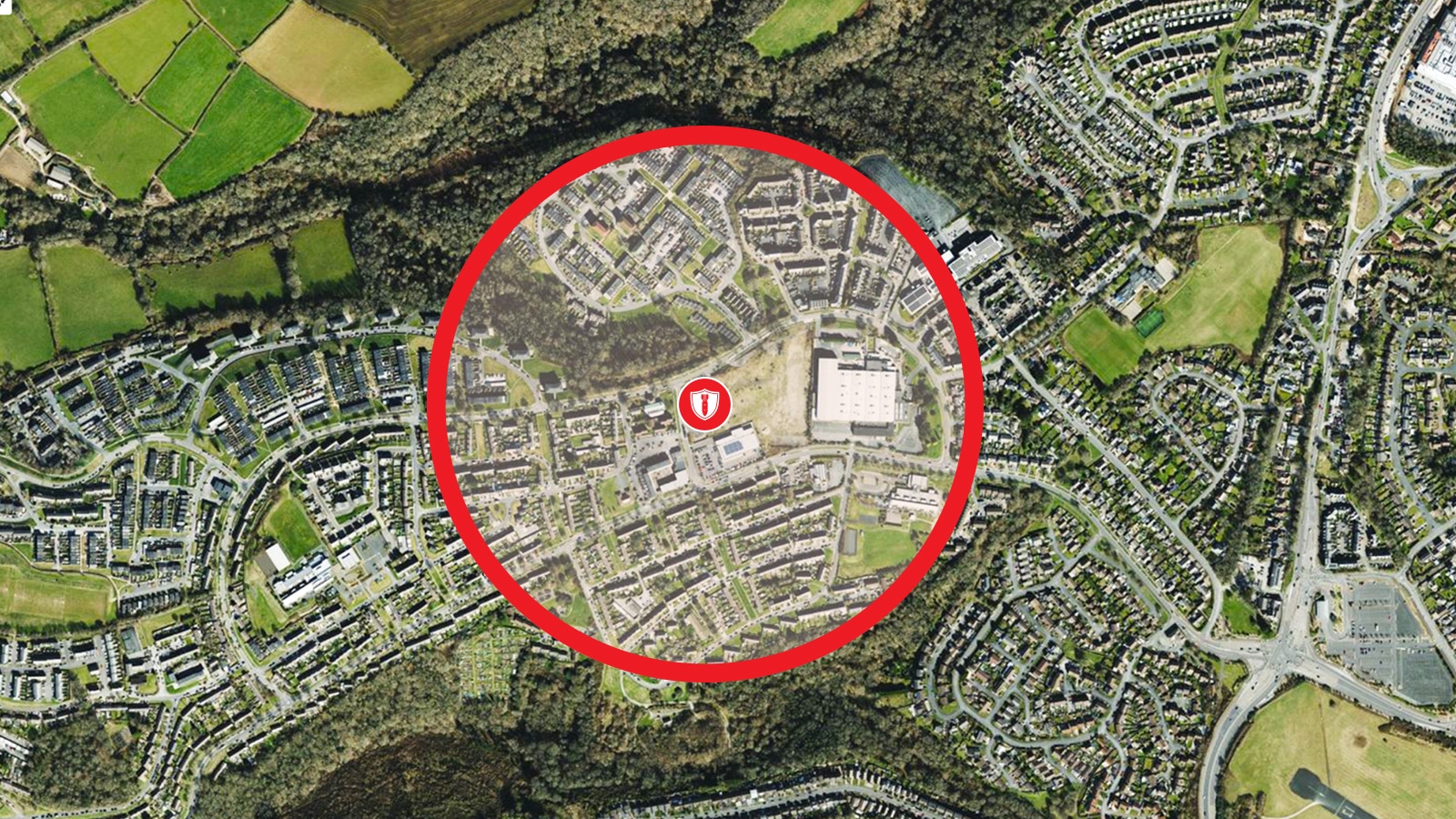
Image showing the location and exclusion zone following the discovery of a 250kg unexploded WWII bomb on a construction site in Plymouth.
Residents unable to make alternative arrangements were supported via an emergency rest centre established at Southway Youth and Community Centre, while local authority and emergency services coordinated the wider response.
Royal Navy EOD teams worked continuously to assess and stabilise the device, including the use of protective sand bunding. Given the condition of the bomb, it was determined that safe removal was not feasible, and the disposal was undertaken in situ.
The operation extended over several days, with residents advised that there might be disruption for multiple nights while the device and situation is made safe.
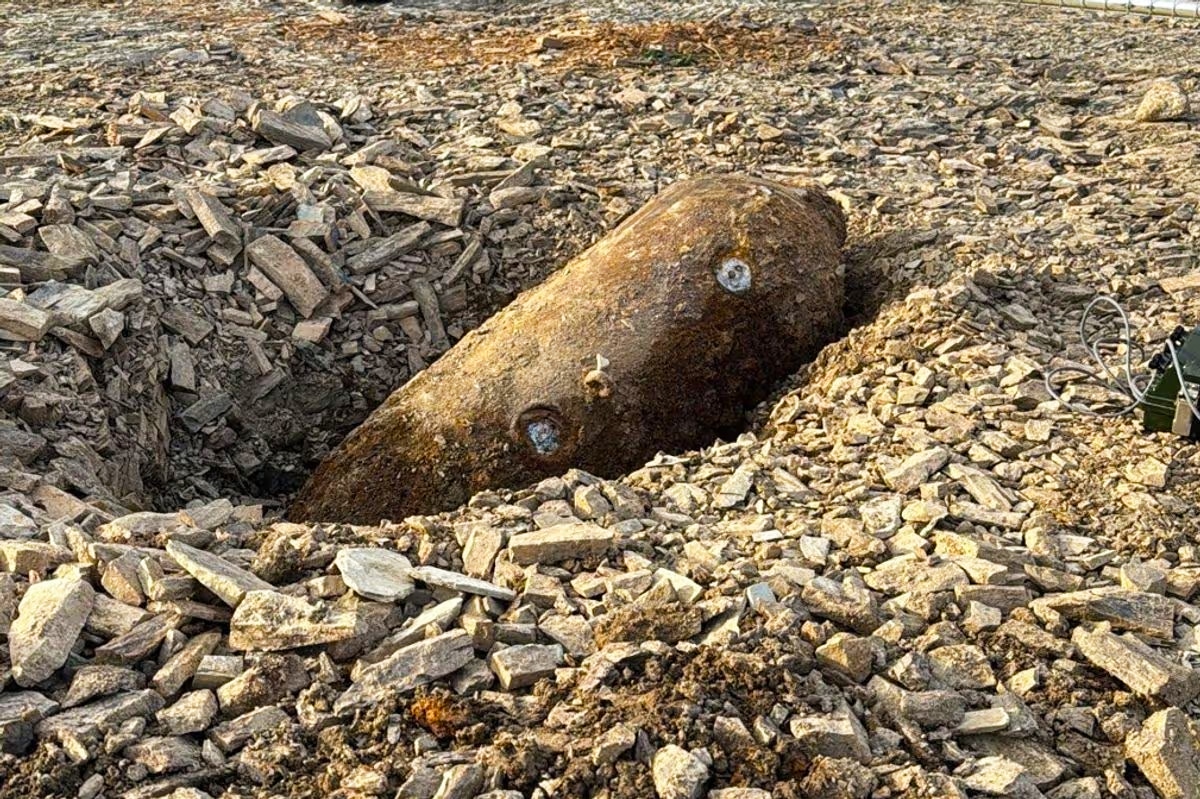
Image showing a 250kg unexploded WWII bomb discovered on a construction site in Plymouth. Image credit: Royal Navy
Devon & Cornwall Police commented: "A huge thank you to the Southway community after a 250kg World War Two bomb was safely dealt with earlier today.
"At around 11.15am this morning, military bomb disposal experts carried out a controlled detonation, bringing a complex, 48-hour operation to a safe conclusion.
"Operations like this are unpredictable and resource-intensive, but thanks to strong partnership working and the expertise of bomb disposal teams, everyone is now safely back where they belong."
Historical Context
Plymouth was one of the most heavily bombed cities in the UK during WWII, reflecting its strategic importance as a naval port. The city experienced sustained Luftwaffe bombing campaigns between 1941 and 1944, resulting in widespread destruction and the deployment of large numbers of high explosive and incendiary bombs.

Image showing damage caused to Devonport in Plymouth following a bombing raid during WWII. Image credit: Internal Resource
Although the Southway area lies to the north of the historic dockyard targets, and was more rural in character during the wartime period – it is not unusual for unexploded bombs to be encountered in such locations.
Many devices fell off target due to navigation error, evasive action or premature release, and a proportion failed to detonate on impact.
It is generally accepted that around 10% of air-dropped bombs from the WWII-era did not function as intended, leaving a residual subsurface hazards and risks that persists with construction and development in the UK to this day.
Ongoing UXO Risk
This incident is a clear reminder that UXO risk remains a live issue across the UK, particularly in areas with known bombing history such as Plymouth and the wider south coast.
Construction activity continues to be one of the most common triggers for UXO discovery, with groundworks exposing previously undetected items. As demonstrated in this case, the consequences can be significant – leading to large-scale evacuations, disruption to local infrastructure – and complex, multi-agency emergency response operations.
The discovery of such devices demonstrate why UXO Risk Assessments and early mitigation are critical during groundworks and redevelopment – particularly in costal city centres where extensive ground development is taking place.
The Importance of Proactive Risk Management
Early consideration of UXO risk through appropriate desk-based assessments and, where necessary, intrusive investigation can significantly reduce the likelihood of such incidents occurring unexpectedly during construction.
A proportionate, evidence-led approach ensures that risks are managed effectively and in line with ALARP principles – helping to protect site personnel, the public and project programmes.
This event in Plymouth (and the earlier incident in January 2026) serves as a timely reminder of the importance of integrating UXO risk management into the early stages of project planning, particularly within historically affected areas.
Check out our UXO City Guides webpage for a summary of the most densely bombed cities throughout the UK.
How can 1st Line Defence help?
At 1st Line Defence, we strongly recommend that UXO risk is considered early in any project. Our comprehensive UXO risk management services include desktop risk assessments, technical surveys and specialist on-site support to help protect personnel and project timelines.
For expert advice on mitigating UXO risk across your project, contact our team on: +44 (0) 1992 245020 or info@1stlinedefence.co.uk.