Home » UXO Services »
What is a UXO Survey?
A UXO Survey is a means of proactive UXO risk mitigation undertaken to reduce the risk of encountering unexploded ordnance on a parcel of land, or marine environment, to as low as reasonably practicable (ALARP).
A UXO Risk Assessment should be undertaken first to determine whether a UXO Survey is required (based on the history of the site), and what type of survey is appropriate – based on factors such as the nature of the risk and the proposed scope of works.
The procedure for a UXO Survey involves scanning and probing the terrain to assess if there are unexploded items of ordnance embedded in the ground, this is to make sure any planned ground works can be completed safely and with the minimum amount of risk to those involved.
What UXO Surveys are available?
We provide a Non-intrusive UXO Survey (walkover, vehicle towed or Drone) and an Intrusive UXO Survey, and the type of UXO Survey recommended will depend on the risk level of your project and the ground conditions.
Looking for more information about UXO Surveys?

Non-intrusive UXO Survey

Drone / Aerial UXO Survey

Intrusive UXO Survey
Non-intrusive UXO Surveys
Ideal for Greenfield site projects (which is previously undeveloped land with little extraneous ferrous contamination).
By walking or towing a mobile detection system over the ground surface our equipment can map your entire project site location.
In good ground conditions, a Non-intrusive UXO Survey can detect a 50kg bomb up to 4m below the surface. It is also ideal for locating smaller and more shallow-buried items such as grenades, mortars and projectiles – both on land and over water.
Drone / Aerial UXO Surveys
Perfect for Greenfield land (which is previously undeveloped land with little extraneous ferrous contamination).
Using a Drone / Unmanned Aerial Vehicle (UAV) which has been installed with the latest magnetometer sensors, collision / obstacle detectors and laser terrain following technology, the drone is flown autonomously and can map a project site location area in a matter of hours.
This technology is particularly useful when trying to detect very small items of UXO or larger items which are buried deeper, it’s fast to deploy and can cover large areas.
Intrusive UXO Surveys
This survey is ideal for detecting deep buried bombs even on previously developed ‘brownfield’ land, and providing clearance of intrusive works ahead of piling or boreholes.
A magnetometer probe is pushed into the ground under hydraulic pressure, and we survey a column of soil to detect for deep buried unexploded bombs (UXBs).
Each survey position provides a column of clearance (diameter dependant on ground conditions) with more than one pile location covered by each survey (dependant on pile spacing) – reducing the overall number of surveys required.
“Just wanted say a huge thank you for sorting out the survey for us and fitting us in so quickly. The operatives on site have been absolutely brilliant over the last week and have kept us informed at every step of the way – even showing us how it all works. An absolute credit to you and your company. I wouldn’t hesitate for a second to use you again and indeed the lads would be top of my list. Please pass on our thanks once again to them.“
Site Manager, Urban Splash
Explore our Case Studies
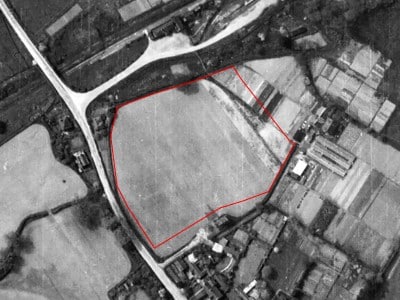
Case Study – East Sussex
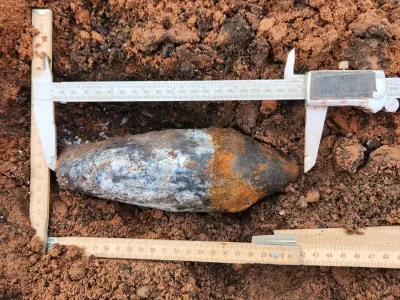
Case Study – Nottinghamshire
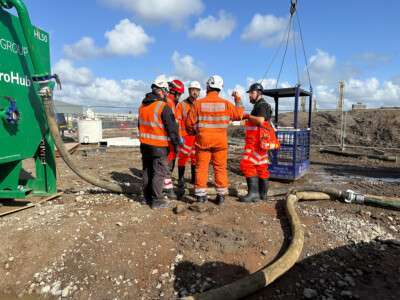
Case Study – Liverpool Docks, Bootle
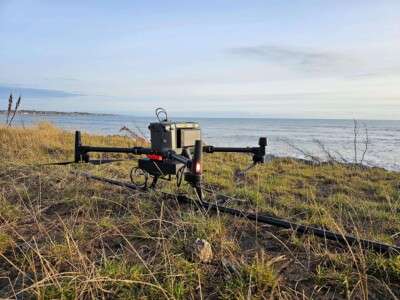
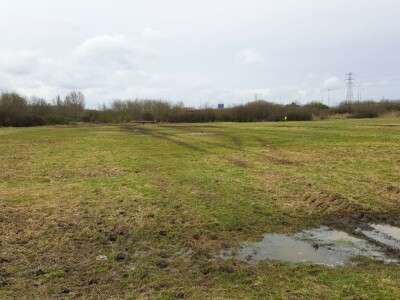
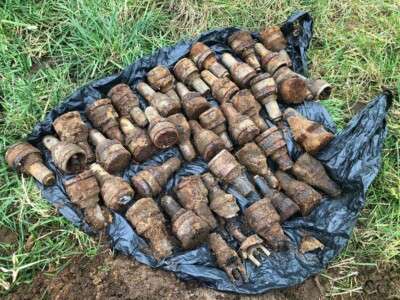
Case Study – Full Sutton, Yorkshire
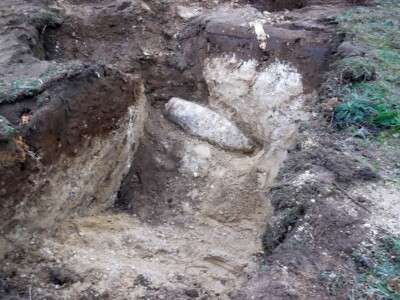
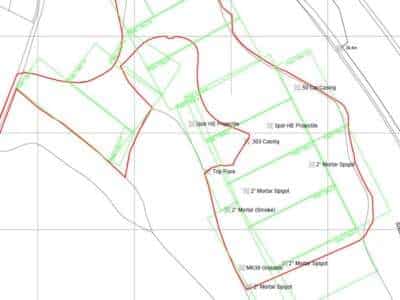
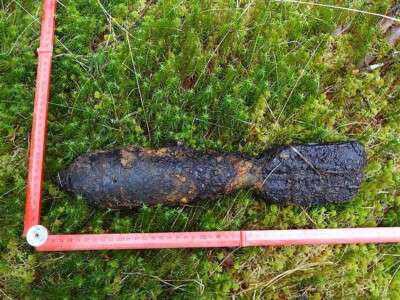
Case Study – Loch Rannoch, Scotland
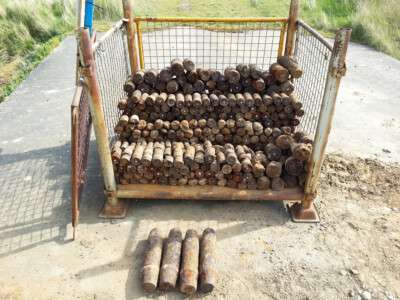
Frequently Asked Questions
Browse the most commonly asked UXO Survey questions or contact us if you have a specific enquiry
It is almost impossible to confirm an exact cost for a UXO Survey without knowing some specific criteria about the site, and reviewing a copy of the UXO Risk Assessment. We would be happy to discuss your project and provide a free quote, call us on +44 (0) 1992 245020 or info@1stlinedefence.co.uk or use our contact form to and we will get in touch to discuss your request.
Not necessarily, it depends on where your site is located and its history. A Preliminary UXO Risk Assessment is the recommended ‘first step’ to ascertain if there is anything of interest in the history of the site which might indicate a viable risk from UXO. If required, a Detailed UXO Risk Assessment would fully qualify any potential risk – and make recommendations for any further survey or support works. Even if your site is located in a heavily bombed area of the UK, it does not necessarily mean that a UXO Survey is required, so it is important to start with a desktop Risk Assessment.
This will vary depending on factors such as the type of survey, terrain, ground conditions, complexity of the survey area, site access, number of survey positions etc. However, as a general guide our Non-intrusive UXO Survey systems can cover around 2ha on average per day using a ‘walkover’ system, 4-5ha using a ‘drone’ survey system and 10ha with a ‘vehicle-mounted’ survey system. For an Intrusive UXO Survey, as a rough guide, in good ground conditions we aim to undertake around 20 surveys per day.
1st Line Defence are not aware of any fatalities from the unexpected detonation of an unexploded air-delivered bomb in the UK since the 1950s. Hundreds of lives were lost during WWII, and there are numerous examples of deaths and serious injuries in recent years on the European mainland. Most recently, in December 2021 four construction workers were seriously injured after drilling equipment struck and detonated a buried British or American 500lb WWII bomb in Munich, Germany. There have however been incidents of injury and death as a result of the detonation of items of Land Service Ammunition (LSA) in the UK.
In short – yes – but only under certain conditions. It is dependent on a variety of factors – which highlights the importance of selecting the right UXO survey methodology. A Non-Intrusive UXO Magnetometer Survey is capable of detecting an item the size of a 50kg German UXB (the most commonly deployed German bomb) at depths of around 4m below ground level. Larger bombs can be detected at greater depths. However, the efficiency of the survey is highly dependent on ground conditions. Non-Intrusive Magnetometer Surveys work well on ground which is relatively ‘clean’ and free from significant extraneous ferrous contamination. The survey is generally not suitable for contaminated ‘brownfield’ sites, where it is often impossible to distinguish the signal from a UXB amongst all the other ferrous anomalies in the ground. An Intrusive UXO Survey can be more appropriate for such sites.
The main difference between a Non-intrusive UXO Survey and a Intrusive UXO Survey is that a Non-intrusive UXO Survey is primarily used to detect close-surface laying or shallow-buried items of UXO on relatively ‘clean’ greenfield sites. Whereas an Intrusive UXO Survey is more suitable for detecting deep buried unexploded bombs (UXBs) – for example ahead of piling works.
Usually, the main pieces of information we require is:
- Copy of a UXO Risk Assessment, risk level and type of risk (Allied / German).
- Site-specific geotechnical information / borehole logs – this is so that we can determine the most appropriate UXO Survey option for your site.
- Detailed instructions about any proposed intrusive ground works – boreholes, trial pits, piling, strip foundations etc.
- Information about any size or weight restrictions for large vehicles. (Intrusive Survey only)
- Full site address and postcode.
To book one of our UXO Survey teams (Non-intrusive or Intrusive), contact us on +44 (0) 1992 245020 or info@1stlinedefence.co.uk or use our contact form and we will get in touch to discuss your request.
There two primary types of data-collecting UXO Surveys that are provided by 1st Line Defence – Non-intrusive and Intrusive. A Non-intrusive Magnetometer Survey detects ferrous objects in the ground from the ground surface, and can be deployed as a ‘walkover’ survey, vehicle towed or by drone / UAV. This type of survey can be very effective at finding items of ordnance on relatively ‘clean’ greenfield sites with little or no extraneous ferrous contamination. However, it is limited in the depth it can detect UXO, and is generally not suitable for ‘brownfield’ sites where there is a lot of made ground / contamination. Click on the following link to find out more about our Non-intrusive UXO Survey. Intrusive UXO Surveys are undertaken when clearance is required for structures that penetrate deep into the ground, for example prior to piling works. An Intrusive UXO Survey consists of a magnetometer probe being inserted into the ground via hydraulic rams from a specialist vehicle / platform. Click on the following link to find out more about our Intrusive UXO Survey.
Yes we can using our Intrusive UXO Survey rigs. However, if there is a high level of background ferrous contamination in an area, it may be necessary to reduce the diameter the area covered by each survey. It is often very difficult (or impossible) to detect a buried UXB from ground level using non-intrusive survey equipment on a ‘brownfield’ site which has significant extraneous ferrous contamination.
Whether conducting an Intrusive or a Non-Intrusive UXO Survey, it is not possible to confirm the nature of an anomaly without physical investigation. Specialist software allows us to model the approximate size and depth of buried ferrous objects – and targets of interest can be selected for further investigation (based on the assessed risk / likelihood of encountering certain types of weaponry in the area). For example, if the historic Risk Assessment only identifies a potential risk from large German UXBs, we would concentrate only on items which model above a certain volume – reducing the number of targets of interest. For Non-Intrusive Surveys, it is often the case (where there are many potential targets in an area) that a recommendation would be made to initially investigate only a percentage of the total as part of a risk reduction exercise.
If a UXO Survey identifies a potential UXO risk (sometimes referred to as an ‘anomaly’ or ‘pUXO’), there are generally two options. If viable, the anomaly could be left in the ground undisturbed (the foundation design could be changed, the area avoided etc.). If this is not possible, it is usually recommended that the anomaly is physically investigated. 1st Line Defence can provide UXO Specialists to undertake the investigation / excavation to determine the nature of the anomaly and confirm any potential threat.
A UXO Survey is the process of scanning or probing the ground (or marine environments) to assess if there are potentially unexploded items of ordnance present. This is to make sure any planned ground works can be carried out safely – and with the minimum amount of risk to those involved. An item of UXO / UXB could sit just centimetres below the surface, or lay several metres below ground-level. It is essential that the right type of UXO Survey is used for your site location based on the UXO risk, ground conditions and proposed works.
If a suspected item of UXO or a UXB is discovered by our UXO Specialists on-site, they will implement set incident management procedures to make sure the item is dealt with safely and appropriately. This will depend on factors such as the nature of the item, its condition, its depth, the location it is found and whether is it live or inert. 1st Line Defence can dispose of the item or will arrange for its disposal / removal so that works can resume as quickly as possible.
German high explosive (HE) bombs dropped during WWII had thick iron casings, and can be readily detected with a magnetometer. Smaller, mainly non-ferrous bombs such as incendiary bombs (which cause fire not an explosion) generally had very low ground-penetrating ability and are less likely to be found buried deep in the ground. Most other types of UXO commonly encountered in the UK also have significant ferrous content. Where we are working on sites where we expect to find items with low or no ferrous content, we can change our primary search / survey instrument.
If your proposed ground works will not disturb the anomaly or its immediate surroundings, the anomaly could be left in situ. If that is not possible, the anomaly will require physical investigation by a 1st Line Defence EOD team. If the item is found to be live UXO, it will need to be safely disposed of.
Looking to order a UXO Survey?
Contact us for guidance on selecting the most suitable UXO Survey for your project, we are always happy to help.