Home » UXO Services » UXO Surveys »
Why do I need a Non-intrusive UXO Survey?
A Non-intrusive UXO Survey makes sure that a project site location is efficiently checked for shallow buried items of (UXO/UXB) so that staff and assets can continue operations safely.
This type of survey is very effective at detecting buried items of Land Service Ammunition, for example: grenades, mortars and projectiles.
This well-tested survey approach is a reliable way of reducing UXO risk on Greenfield land projects, and is also suitable for shallow water (for example: inland waterways and lakes).
In optimum ground conditions, the survey system can detect a buried 50kg German iron bomb at a max depth of around 4m below ground level, but isn’t appropriate for clearance ahead of deep piled foundations – for this you’ll need an Intrusive UXO Survey.
What is a Non-intrusive UXO Survey?
If a project site location is free from significant ferrous contamination, a non-intrusive magnetometer survey system can be used to detect sub-surface ferrous anomalies.
The detector system is either walked or vehicle-mounted and towed across the surface so that the ground isn’t disturbed, making it a quick and effective way of surveying a large project site location.
The survey is carried out by a specialist two-person team and is normally a two-phase process, the first phase is the survey and then a Target Investigation Phase.
Data from the magnetometer survey is logged and sent back to our in-house geophysical team for processing and interpretation, and our bespoke software produces a ‘false colour’ map of the site location highlighting any ferrous anomalies discovered.
The data is reviewed and any items which model similar to buried UXO are identified for further Target Investigation, and included in a client report. We explain any potential risks to you, and if needed – outline any further specialist support required.
For larger projects and in certain circumstances, we can also offer a Drone / Aerial UXO Survey via our UAV survey system.
What is the Target Investigation Phase?
Once a Non-intrusive Survey has been completed, the data processed and a list is created to carry out Target Investigation – which a process of identifying and clearing any items of UXO found from the project site location.
Our team of UXO Specialists (who are EOD certified) are deployed on-site to physically locate and investigate the targets.
Specialist GPS equipment allows each mapped anomaly to be located as quickly as possible, with software providing estimates of depth and mass. Any UXO-related anomalies found are identified, classified and arrangements made for safe removal/disposal.
Explore our Case Studies
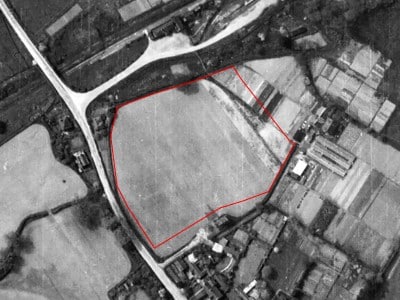
Case Study – East Sussex
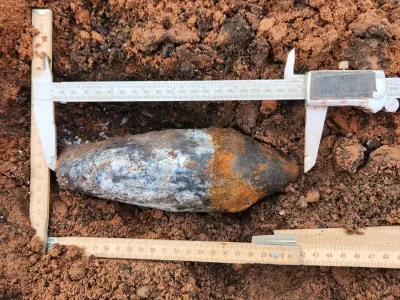
Case Study – Nottinghamshire
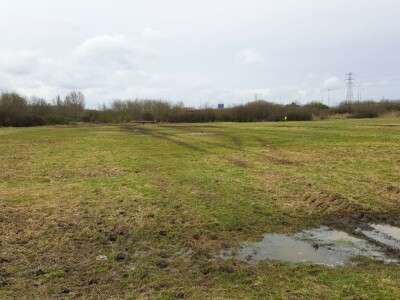
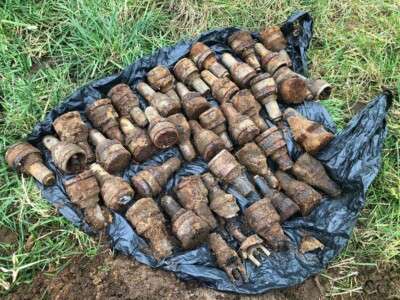
Case Study – Full Sutton, Yorkshire
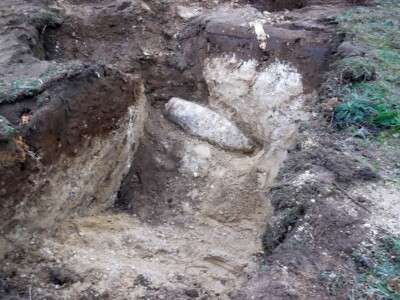
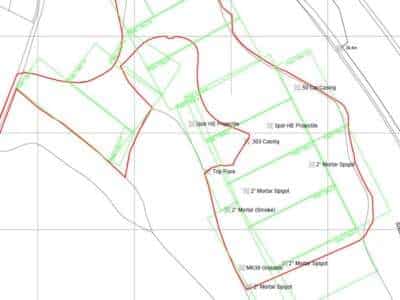
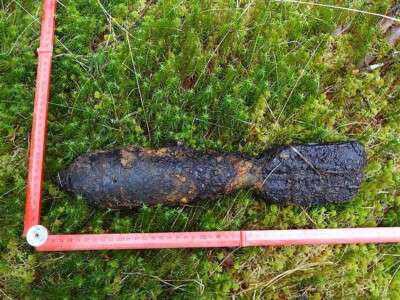
Case Study – Loch Rannoch, Scotland
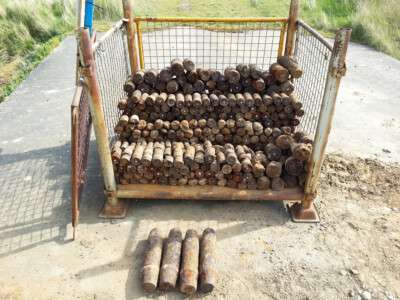
“I just want to say how much I appreciate how you guys have turned all this round for us this week on such short notice. It has been pretty stressful given the deadline but dealing with you guys has honestly been a pleasure and on behalf of myself, McAuliffes and I’m sure John Sisk also, I just want to say a massive thank you.“
Contracts Manager, McAuliffe Group
Frequently Asked Questions
Browse the most commonly asked Non-intrusive UXO Survey questions or contact us if you have a specific enquiry
Undertaking a UXO Survey alone will not reduce the risk of encountering Unexploded Ordnance. A Non-intrusive UXO Survey is part one of a two-stage process. The survey detects and logs ferrous signatures in the ground. This data is used to create a ‘false colour map’ showing ferrous anomalies which may be UXO related. 1st Line Defence geophysicists model and interpret the data and select targets of interest for further investigation. If there are a lot of targets, it will often be recommended to investigate a certain percentage of them as part of a ‘risk reduction’ exercise. Stage two of the process would them be sending a team of UXO Specialists to site to locate and excavate the targets of interest – what we refer to as ‘Target Investigation’.
This will vary depending on factors such as terrain, ground conditions, complexity of the survey area shape etc. However, as a guide, on average 1st Line Defence can cover two hectares per day as part of a standard ‘walkover’ survey, four to five hectares using our drone, and around 10ha with a vehicle mounted survey. It is important to get the right type of survey, so talk to our consultants to find out what would be best for your project.
It is very difficult to confirm an exact cost for a Non-intrusive UXO Survey without reviewing a copy of the UXO Risk Assessment for your site, the risk level and type of risk (Allied or German). To discuss your project in more detail, contact us on +44 (0) 1992 245020 or info@1stlinedefence.co.uk or use our contact form and we will provide a no-obligation quote.
If a suspected item of UXO or a UXB is discovered by our UXO Specialists on-site, they will implement set incident management procedures to make sure the item is dealt with safely and appropriately. This will depend on factors such as the nature of the item, its condition, its depth, the location it is found and whether is it live or inert. 1st Line Defence can dispose of the item or will arrange for its disposal / removal so that works can resume as quickly as possible.
The physical limitations of any non-intrusive magnetometer survey will usually mean they are not suitable for clearing piling works from deep buried UXBs from surface. Commonly used commercial survey systems are capable of detecting a 50kg German bomb at around 4m below ground level in relatively clean ground conditions. This was the most commonly deployed German bomb. Whilst a Non-intrusive UXO Survey may detect bigger bombs at deeper depths, the maximum penetration depth that a 50kg bomb can reach exceeds the survey depth of non-intrusive equipment and therefore they survey cannot ‘de-risk’ piling proposed to greater depths.
In relatively ‘clean’ ground, a magnetometer survey can easily detect shallow buried ferrous Land Service Ammunition (grenades, mortars, projectiles etc.). A 50kg German unexploded bomb (the most common dropped during WWII), can be detected down to around 4m depth. Larger bombs can be detected to greater depths.
If a Non-intrusive UXO Survey identifies a potential ordnance risk (sometimes referred to as an ‘anomaly’ or ‘pUXO’), there are generally two options. If viable, the anomaly could be left in the ground undisturbed (the foundation design could be changed, the area avoided etc.). If this is not possible, it is usually recommended that the anomaly is physically investigated. 1st Line Defence can provide UXO Specialists to undertake the investigation / excavation to determine the nature of the anomaly and confirm any potential threat.
To book one of our Non-intrusive UXO Survey teams, contact us on +44 (0) 1992 245020 or info@1stlinedefence.co.uk or register your interest on our contact page and we will get in touch to discuss your request.
Our primary survey equipment is magnetometer based, so will detect anything with ferrous content. German high explosive (HE) bombs used thick iron casings, which can be easily detected using a magnetometer survey system. Similarly, the majority of historic British and Allied ordnance had ferrous content which can be readily detectable with magnetometry. However, not all weaponry has significant ferrous content, so the type of survey / detection equipment we deploy will be based upon the nature of the potential threat present.
As a rough guide, in optimum conditions, our Non-intrusive UXO Survey systems can cover 2ha on average per day using a ‘walkover’ survey system, 4-5ha using a ‘drone’ system and 10ha with a ‘vehicle-mounted’ survey system.
Our team will guide you through exactly what is required for a Non-intrusive Survey to be undertaken, including asking questions about the suitability of the site – terrain, ground cover etc. In general however, we will also require the following:
- Copy of a UXO Risk Assessment, risk level and type of risk (Allied / German).
- Site-specific geotechnical information / borehole logs – this is so that we can determine the most appropriate UXO Survey option for your site.
- Detailed instructions about any proposed intrusive ground works – boreholes, trial pits, piling, strip foundations etc.
- Full site address and postcode.
When conducting a Non-Intrusive UXO Survey it is not possible to confirm the nature of an anomaly without physical investigation. Specialist software allows us to model the approximate size and depth of buried ferrous objects – and targets of interest can be selected for further investigation (based on the assessed risk / likelihood of encountering certain types of weaponry in the area). For example, if the historic Risk Assessment only identifies a potential risk from large German UXBs, we would concentrate only on items which model above a certain volume – reducing the number of targets of interest. For Non-Intrusive Surveys, it is often the case (where there are many potential targets in an area) that a recommendation would be made to initially investigate only a percentage of the total as part of a risk reduction exercise.
1st Line Defence provides three types of Non-Intrusive Survey platform – we offer a ‘walkover’, ‘vehicle-towed’ or ‘Drone’ survey system – and the type of system we recommend will depend on the site and type of UXO risk. Overall, we are striving to provide the quickest, convenient and cost-effective UXO Survey system for your site.
In general, the answer is ‘no’ – or at least a magnetometer survey is going to be much less effective on any brownfield site compared to a relatively ‘clean’ greenfield area. A magnetometer survey detects and records anything ferrous in the ground. On a previously developed brownfield site, it will detect all extraneous ferrous contamination – rebar, services, fencing etc. in addition to any buried UXO which might be present. On very contaminated sites, it is often not possible during data interpretation to distinguish a discreet anomaly which might be UXO related from all the other background contamination.
The depth that an air-delivered bomb can penetrate into the ground depends largely on the density of the underlying geological strata. In generic ‘London Clay’ the maximum bomb penetration depth (BPD) for a 500kg bomb can be around 12m below ground level. However, the velocity of a UXB can be retarded and sometimes stopped by strata such as dense gravels or a high rock head. 1st Line Defence can provide site specific assessments of maximum BPD based on borehole logs or during on-site support.
A UXO Survey is a two-stage process. The first phase is the survey itself where data is collected to be modelled / interpreted by our in-house geophysicists. Targets which model similar in size and weight to an item of UXO or a UXB are highlighted, and a target list of anomalies of interest is put together. Stage two would then be the physical investigation of these anomalies to ascertain whether or not they are UXO related. If the item is confirmed to be an item of UXO / UXB – further investigation is required to determine whether its live or inert. If the item is found to be live, 1st Line Defence can coordinate its safe removal / disposal. If the item is inert, it will be safely removed from site so that ground works can proceed safely.
Looking to order a Non-intrusive UXO Survey?
Contact us for more details or to schedule a Non-Intrusive UXO Survey, our team of UXO specialists is ready to support your project.