Home » Resources » UXO City Guides »
UXO City Guide
Home Office Bombing Statistics for Penzance
Record of German Ordnance dropped on the Municipal Borough of Penzance
High Explosive Bombs (All types)
170
Parachute Mines
1
Oil Bombs
1
Phosphorus Bombs
0
Fire Pots
39
Pilotless Aircraft (V-1)
0
Long-range Rocket Bombs (V-2)
0
Weapons Total
211
Area Acreage
3,155
Number of items per 1,000 acres
66.9
Why was Penzance targeted and bombed in WWII?
Penzance and the wider Mount’s Bay area are not typically considered amongst the more heavily bombed locations in the UK during WWII. However, despite its comparatively remote location in the far west of Cornwall – the town and surrounding coastal communities experienced repeated Luftwaffe activity between 1940 and 1944 – and sustained over 170 recorded high-explosive (HE) bomb strikes.
The area’s strategic maritime position, harbour facilities, railway infrastructure and proximity to shipping routes made it vulnerable to both deliberate attack and opportunistic bombing.
Although the scale of bombing was significantly lower than in major industrial centres, like in many towns across the UK, the UXO risk cannot be discounted. As with many coastal areas of the south-west, the potential also exists for Allied military contamination, associated with wartime training activity, defensive positions and former military installations.
The Luftwaffe reconnaissance photograph below, taken in November 1940, highlights Penzance Harbour and key infrastructure considered of wartime significance, including the tidal lock/floodgate, lighthouse, warehouse buildings and quay.
Home Office Bombing Statistics for Penzance
Details obtained from the official Home Office bombing statistics, highlights the volume and type of bombs that fell on the Municipal Borough of Penzance throughout WWII.
A total of 211 recorded bombs fell on Penzance, equating to 66.9 items of ordnance per 1,000 acres.
Important factors about why Penzance was targeted
Penzance occupied an important strategic position during WWII. Located on the south coast of Cornwall overlooking Mount’s Bay, the town served as a regional transport hub and an important harbour facility for west Cornwall.
Several factors increased the likelihood of Luftwaffe activity in the area:
- Penzance Harbour and nearby Newlyn Harbour supported fishing, coastal shipping and wartime maritime activity.
- The railway terminus at Penzance was a critical transport and logistics link for west Cornwall.
- The wider Cornish coastline was heavily militarised due to fears of German invasion during 1940–1941.
- Coastal shipping operating around Land’s End and the western approaches was vulnerable to attack from German aircraft and submarines.
- The wider region contained RAF, Royal Navy and military facilities associated with coastal defence, anti-submarine warfare and convoy protection.
The Penzance Blitz
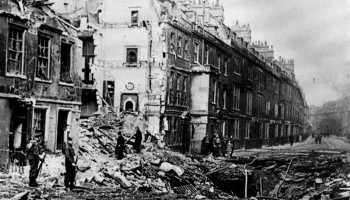
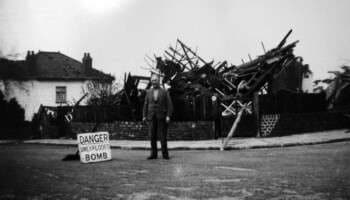
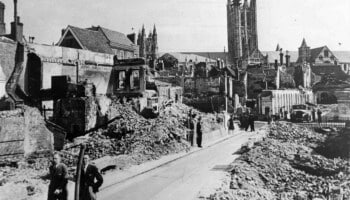
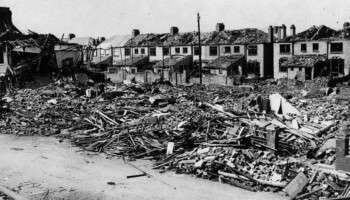
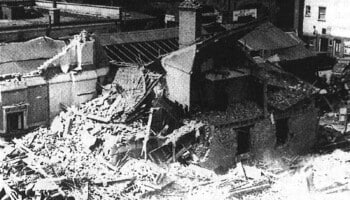
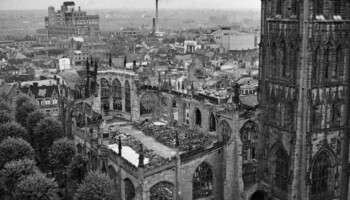
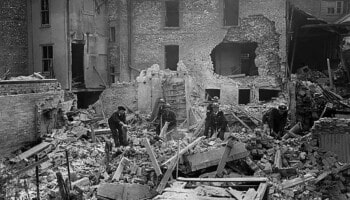
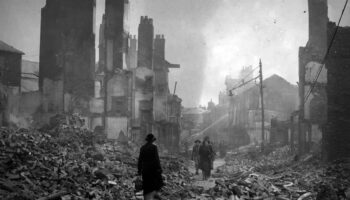
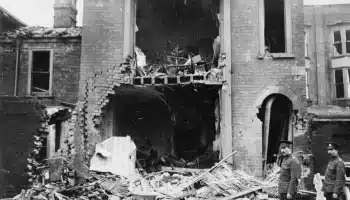
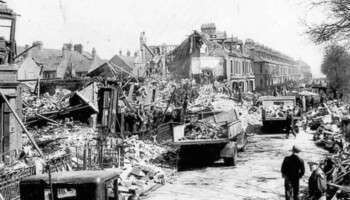
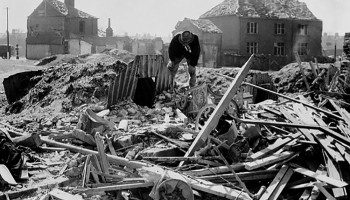
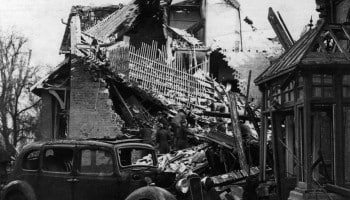
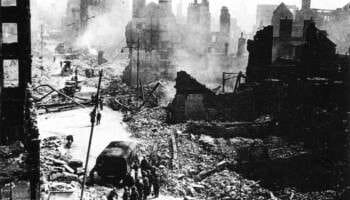
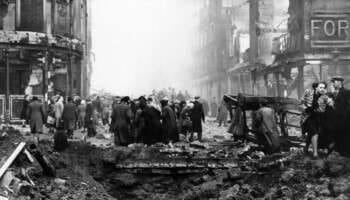
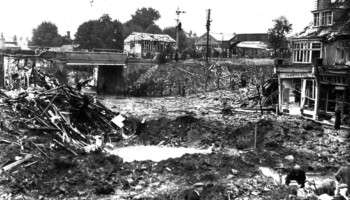
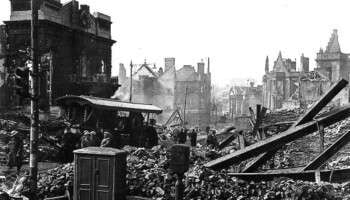
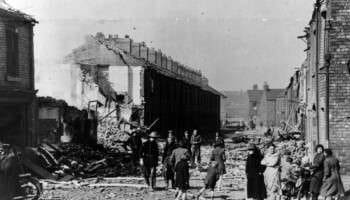
The period between 1940 and 1942 saw repeated air raid activity across Penzance and the surrounding district. The town was subject to over 700 air raid alerts between 1940 and 1945. Some 16 people were killed over the course of the war, with around 48 houses completely destroyed, and 157 seriously damaged.
The most significant raids occurred during 1940 and 1941, coinciding with wider Luftwaffe operations against British coastal towns and ports.
Areas affected included:
- Penzance Harbour
- The railway and goods infrastructure
- Residential districts within and around the town
- Newlyn and other settlements around Mount’s Bay
- Coastal areas associated with shipping and harbour activity
Historical accounts record civilian casualties and damage to homes, commercial premises and infrastructure during these raids. Incendiary bombs were also recorded in the area, creating secondary fire risks in more densely built-up areas.
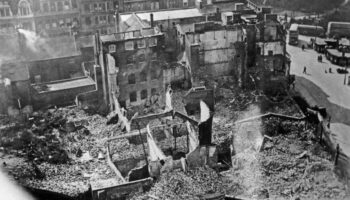
Early raids in 1940 primarily involved high explosive bombing, including incidents affecting the railway station area and commercial centre, where blast damage extended along Market Jew Street. Later that year, a significant raid involving multiple aircraft dropped more than 50 high explosive bombs across the town – causing extensive damage and several fatalities.
The most serious attack occurred on 8th June 1941, when bombing struck the residential areas of Alma Terrace and St James Street, killing nine people, injuring 26 and damaging hundreds of houses.
Bombing continued into 1942, with raids affecting both urban and rural areas around Penzance. One major raid caused extensive damage to warehouses, shops and key water infrastructure, temporarily severing the town’s water supply.
Penzance served as a reception area for evacuees during the war, and one 1942 raid struck a hostel housing boys evacuated from Devonport High School. Fortunately, the occupants had taken shelter and escaped with only minor injuries, although the incident further illustrates the indiscriminate nature of bombing across the town and surrounding area.
Military Activity around Penzance
In addition to German bombing, west Cornwall saw extensive military activity throughout WWII. Key wartime military features in and around the Penzance area included:
- Battery Rocks, Penzance – the seafront area was requisitioned for military use and hosted anti-aircraft defences intended to protect Mount’s Bay, harbour facilities and the town from air attack.
- Mount’s Bay Coastal Defences – beaches at Marazion, Long Rock, Eastern Green and Wherrytown were fortified with pillboxes, anti-tank obstacles, barbed wire and defended strongpoints as part of the UK’s anti-invasion preparations.
- St Michael’s Mount – occupied for defensive and observation purposes during the war, forming part of the wider coastal surveillance network around Mount’s Bay.
- Harbour and Maritime Defences – both Penzance and Newlyn harbours supported wartime maritime activity and local defence operations, increasing military presence around the waterfront.
- Military Camps and Troop Billeting – large numbers of personnel were stationed across west Cornwall, with temporary camps, stores and defensive infrastructure established on open land and rural areas around Penzance.
- Observation and Early Warning Infrastructure — coastal observation posts and Royal Observer Corps facilities operated across west Penwith, supported regionally by radar installations monitoring the western approaches.
- Historic military airfields in the wider region, including RAF Predannack, RAF St Eval and RAF St Mawgan, supported maritime patrol, convoy protection and wider defensive operations across Cornwall.
From a UXO perspective, former defensive positions, military occupation land and harbour-related sites can sometimes present a localised risk of Allied military contamination – including discarded ammunition, pyrotechnics and locally buried military materials.
As with bombing risk, the relevance of this legacy depends heavily on the site history and nature of the proposed works, and a UXO Risk Assessment is essential in determining whether there is anything of concern on or around a site.
Can UXO still pose a risk to construction projects in Penzance?
Yes – UXO can still present a potential risk to construction and development projects in Penzance.
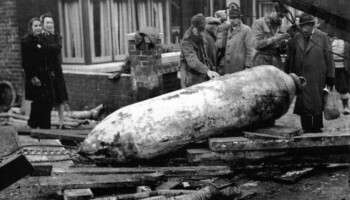
The primary threat comes from German air-delivered bombs dropped during WWII that failed to detonate as intended. It is estimated that around 10% of munitions deployed across the UK did not function correctly. Although significant wartime and post-war bomb disposal operations were carried out, not all unexploded bombs (UXBs) were located or removed.
Ongoing discoveries of UXO during intrusive groundworks across the UK continue to demonstrate that buried wartime ordnance remains a potential risk – including in areas such as Penzance.
I am about to start a project in Penzance, what should I do?
Before any intrusive groundworks begin, developers, principal contractors, and ground investigation teams should assess potential UXO risk through either:
This forms the first stage of an effective UXO risk mitigation strategy and should be undertaken as early as possible in the project lifecycle, in line with CIRIA C681 guidance.
Why does an early UXO Risk Assessment matter?
Where a credible risk is identified, appropriate mitigation measures should be implemented to reduce risk to As Low As Reasonably Practicable (ALARP).
Equally, unnecessary mitigation can create avoidable project costs, delays and operational disruption.
A professional UXO Risk Assessment will make sure:
- Site-specific threats are properly identified.
- Appropriate mitigation strategies are recommended.
- Unnecessary mitigation measures are avoided.
- Projects remain compliant, safe and commercially efficient.
Early-stage UXO Risk Assessments help developers make informed decisions, protect personnel, maintain compliance and avoid unnecessary expenditure.
If you are planning development or intrusive groundworks in Penzance, obtaining a professional and unbiased UXO Risk Assessment should be your first step.
References
https://picturepenzance.com/https://www.cornwallfhs.com/cornwallswarhistory/maps/bombings/
https://kresenkernow.org/https://www.cornwallrailwaysociety.org.uk/cornish-railways-war-diary.html
https://bodminkeep.org.uk/the-cornwall-blitz-and-the-bombing-of-bodmin
https://www.dcpolicingmuseum.co.uk/policing-the-blitz-world-war-two
Get UXO risk mitigation services from a partner you can trust
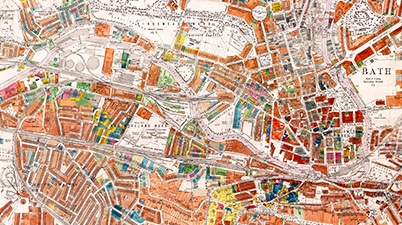
UXO Risk Assessments
UXO Surveys

UXO Support
Free Awareness CPD Seminars
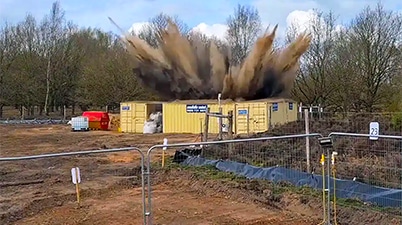
UXO Disposal

International UXO Services

Marine UXO Services
UXO City Guides


Got a project in Penzance? Need advice but not sure where to start?
If you need general advice about UXO risk mitigation in Penzance, get in touch.












Contact Us
* indicates required fields