Home » Resources » UXO City Guides »
UXO City Guide
Home Office Bombing Statistics for Bath
Record of German Ordnance dropped on the County Borough of Bath
High Explosive Bombs (All types)
410
Parachute Mines
0
Oil Bombs
1
Phosphorus Bombs
0
Fire Pots
0
Pilotless Aircraft (V-1)
0
Long-range Rocket Bombs (V-2)
0
Weapons Total
411
Area Acreage
5,152
Number of items per 1,000 acres
80
Why was Bath targeted and bombed in WWII?
Although the city of Bath contained hardly any targets of military or industrial significance during WWII, it still suffered devastating bombing at the hands of the Luftwaffe. This was largely due to the ‘Baedeker Raids’ of April and May 1942, which included a series of attacks ordered by Hitler on British ‘cultural’ targets.
These were in retaliation for the Royal Air Force (RAF) raid on the historic city of Lübeck in northern Germany. Distinguished by its famous Gothic and Medieval architecture, Lübeck was of considerable historic value. It was chosen by British Bomber Command as a target not for its manufacturing or engineering significance, but because it was straightforward to locate, would easily allow testing of new bombing tactics – and would damage German morale.
In reprisal, the German military planned the bombing of British cities of cultural significance – Exeter, Norwich, York, Canterbury – and famously – Bath. These were reportedly selected from the German Baedeker travel guide as cities of historic merit.
Luftwaffe target photography of Bath. Image credit: Imperial War Museum
Home Office Bombing Statistics for Bath
Details obtained from the official Home Office bombing statistics, highlights the volume and type of bombs that fell on County Borough of Bath throughout WWII.
A total of 410 recorded bombs fell on Bath, equating to 80 items of ordnance per 1,000 acres.
However, this does not account for any bombs that fell unrecorded and unexploded during the April 1942 raid. These unidentifiable items, falling unnoticed are what pose a potential risk to construction today.
There were a number of specific targets within Bath which drew particular attention of the Luftwaffe. For example, the German military target/reconnaissance photograph above identifies a Gas Works west of the cite centre, and a military camp (MoD Foxhill) to its south-east.
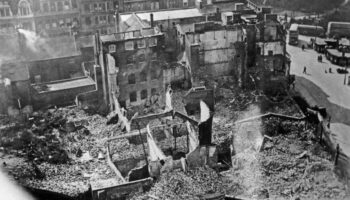
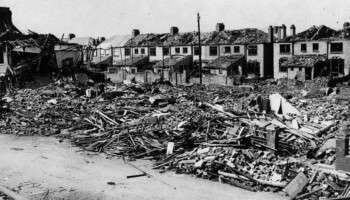
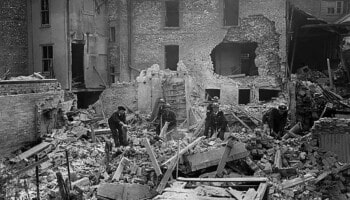
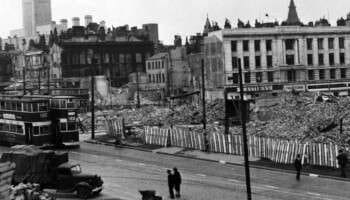
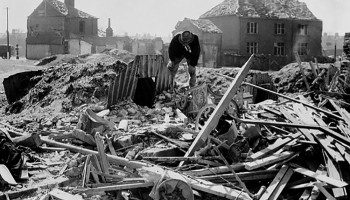
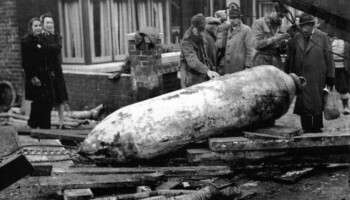
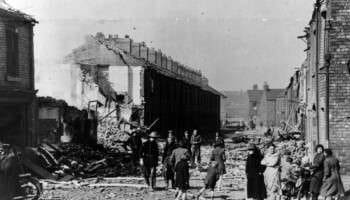
Image showing bomb damage on Kingsmead Street, Bath following the Baedeker raids of April 1942. (Image source: The Bombing of Bath).
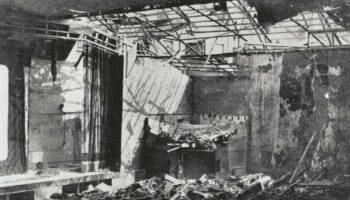
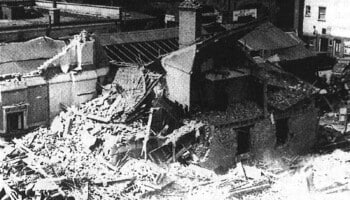
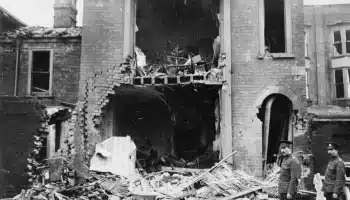
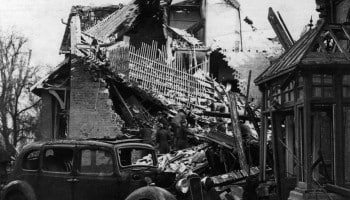
Image showing serious bomb damage on King Edward Road, Bath. Note that the street bomb shelters survived the blast. (Image source: The Bombing of Bath).
The Bath Blitz: April 25-27, 1942
Bath was attacked over three consecutive nights on the weekend of 25th to the 27th April 1942. High explosive bombs dropped by over eighty bombers of Luftflotte III killed over 400 people. Many residents ignored the initial air-raid sirens, as they presumed the aircraft would be targeting Bristol, as had happened almost every night for the previous four months1. The raids totally destroyed 329 buildings, wrecked an additional 700 so severely that they had to be demolished, and inflicted some degree of damage to at least 1,900 properties2.
The first raid began just before 23:00 on the Saturday night and lasted until 01:00. The German aircraft then returned to bases in France, refuelled, rearmed and returned at 04:35. Bath was still on fire from the first raid, making it easier for the bombers to pick out their targets. The third raid commenced in the early hours of Monday morning. This only lasted two hours but reportedly caused extensive damage. The bombers flew low to drop their high explosives and incendiaries, Bath had no significant air defences during any of the raids. Some of the attackers machine-gunned the streets to hamper the emergency services3.
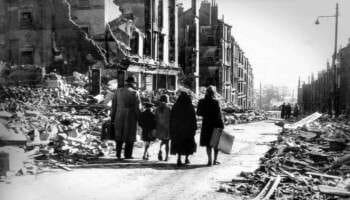
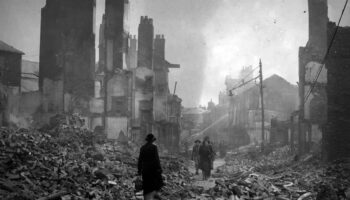
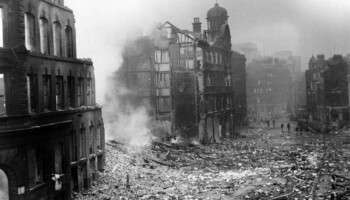
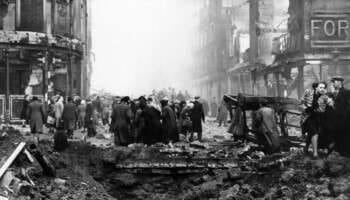
Image showing damage caused to New King Street in Bath following the Bath Blitz of April 1942. (Image source: bathblitz.org).
Destruction and Damage in Bath
The resulting damage and disruption was on a huge scale. The photograph above shows New King Street, which was a busy route into the city centre from the west in 1942.
This type of damage was typical, with bomb craters and collapsed buildings all across Bath’s historic streets. Rubble from one part of a street would be used to fill bomb craters in another, to create a passable surface. Unexploded bombs had to be dealt with, so several areas remained evacuated after the raids.
The image below is a section of the Bath Bomb Damage Map showing the severity of damage that resulted from the bombing raids of April 1942. Few areas of the city were left untouched.
Image highlighting a section of the Bath Bomb Damage Map showing the St James Ward area of the city. (Image source: Bath Record Office).
Aftermath: Rubble, Craters & Displacement
The North-eastern and central parts of the city were the worst affected areas. Many historic and residential neighbourhoods were badly damaged. In the city centre, Queen Square, The Assembly Rooms, The Circus and Gay Street were all damaged. The Walcot Street and London Road areas to the east of the centre received a high concentration of strikes – largely affecting working class housing. Incendiary bombing was bad around Green Park and Lower Weston – many commercial properties in particular were destroyed.
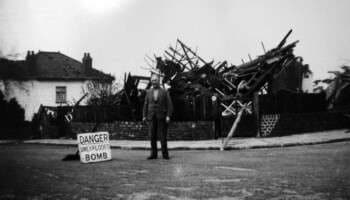
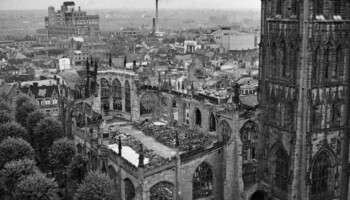
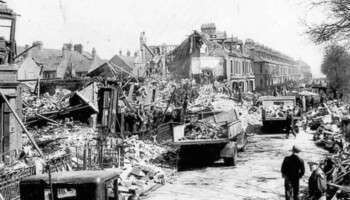
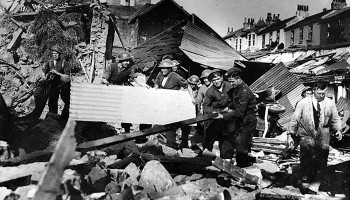
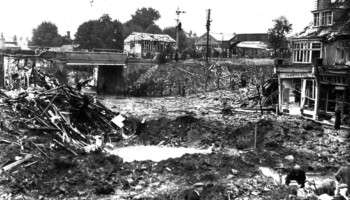
Image showing the aftermath of the Baedeker Raid on Bath, including collapsed houses in Shakespeare Avenue to the south of the city centre. (Image source: The Bombing of Bath).
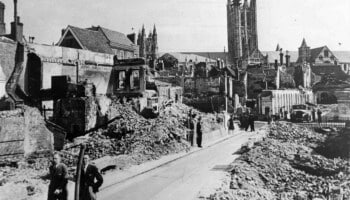
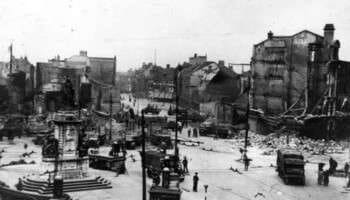
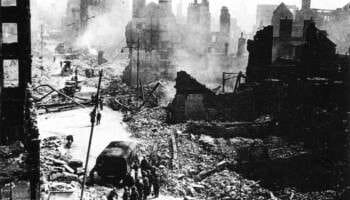
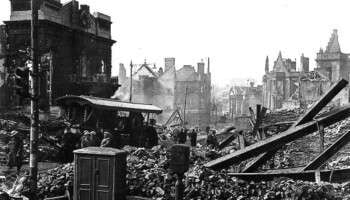
Image showing whole streets of cleared structures following high explosive bomb damage in the Roseberry Road area of Bath, 1942. (Image source: The Bombing of Bath).
Can UXO still pose a risk to construction projects in Bath?
Yes – UXO can still present a potential risk to construction and development projects in Bath.
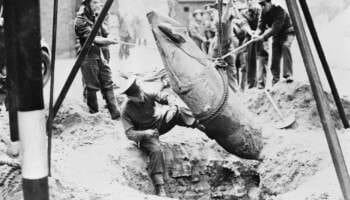
The primary threat comes from German air-delivered bombs dropped during WWII that failed to detonate as intended. It is estimated that around 10% of munitions deployed across the UK did not function correctly. Although significant wartime and post-war bomb disposal operations were carried out, not all unexploded bombs (UXBs) were located or removed.
Ongoing discoveries of UXO during intrusive groundworks across the UK continue to demonstrate that buried wartime ordnance remains a potential risk – including in areas such as Bath.
I am about to start a project in Bath, what should I do?
Before any intrusive groundworks begin, developers, principal contractors, and ground investigation teams should assess potential UXO risk through either:
This forms the first stage of an effective UXO risk mitigation strategy and should be undertaken as early as possible in the project lifecycle, in line with CIRIA C681 guidance.
Why does an early UXO Risk Assessment matter?
Where a credible risk is identified, appropriate mitigation measures should be implemented to reduce risk to As Low As Reasonably Practicable (ALARP).
Equally, unnecessary mitigation can create avoidable project costs, delays and operational disruption.
A professional UXO Risk Assessment will make sure:
- Site-specific threats are properly identified.
- Appropriate mitigation strategies are recommended.
- Unnecessary mitigation measures are avoided.
- Projects remain compliant, safe and commercially efficient.
Early-stage UXO Risk Assessments help developers make informed decisions, protect personnel, maintain compliance and avoid unnecessary expenditure.
If you are planning development or intrusive groundworks in Bath, obtaining a professional and unbiased UXO Risk Assessment should be your first step.
Recent UXO discoveries in Bath
Since the war, many items of UXO have been discovered across multiple cities within the UK, with Bath no exception. See the news articles below about UXO incidents and discoveries from national and local press in Bath.
1st Line Defence keep up-to-date with relevant and noteworthy UXO-related news stories reported across the UK, and you can browse through these articles using the buttons below.
Press articles 2026 Press articles 2025 Press articles 2024
Get UXO risk mitigation services from a partner you can trust
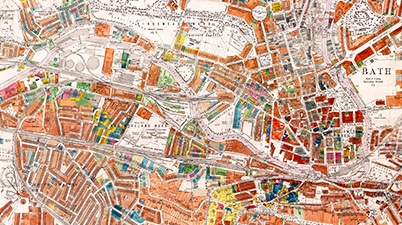
UXO Risk Assessments
Site-specific UXO Risk Assessments using specialist historical research to identify potential threats and determine whether further mitigation is required.
UXO Surveys
Detect and investigate potential buried UXO with specialist Non-intrusive and Intrusive Surveys tailored to your site and proposed groundworks.
UXO Support
On-site UXO support to manage potential ordnance risks during groundworks, protecting personnel and helping your project proceed safely and efficiently.
Free Awareness CPD Seminars
Helping construction professionals understand UXO risk, its potential impact on projects and how it can be effectively managed.
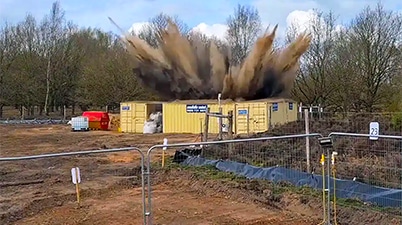
UXO Disposal
Safely manage UXO discoveries with specialist EOD support, from investigation and identification through to clearance and disposal.
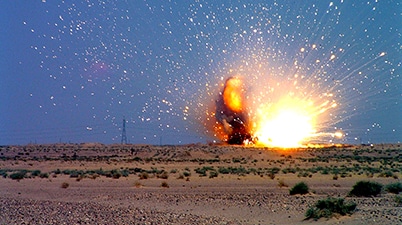
International UXO Services
Specialist EOD teams supporting international UXO survey, clearance and disposal projects, with personnel available for rapid deployment worldwide.
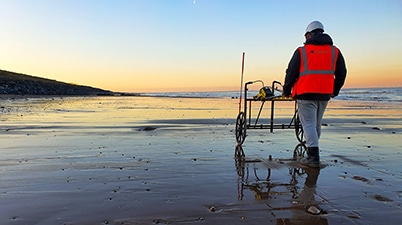
Marine UXO Services
Manage UXO risk on marine and offshore projects with specialist survey, investigation, clearance and disposal services tailored to your project.
UXO City Guides

Got a project in Bath? Need advice but not sure where to start?
If you need general advice about UXO risk mitigation in Bath, get in touch.












Contact Us
* indicates required fields